Aurora Király
Aurora Király is an artist working with photography and installation in a variety of media, at the intersection of photography with textile art, drawing or installations. She recently took part in art residencies such as at Kunsthalle Mulhouse (2024) or the Boghossian Foundation at Villa Empain, in Brussels (2022). Aurora Király explores how the mind records, relives, remembers. She is particularly interested in exploring feminist theories in relation with identity-making and the status of women in society. Her works relates to complex connections between events, public and private sphere of experience. Her works are in collections such as New York’s Museum of Modern Art (MoMA), The National Museum of Contemporary Art Bucharest, European Parliament’s Contemporary Art Collection and private collections in Europe and North America.
Find Aurora Király here:
https://www.aurorakiraly.com/
https://www.ancapoterasu.com/artists/aurora-kiraly/
Viewfinder
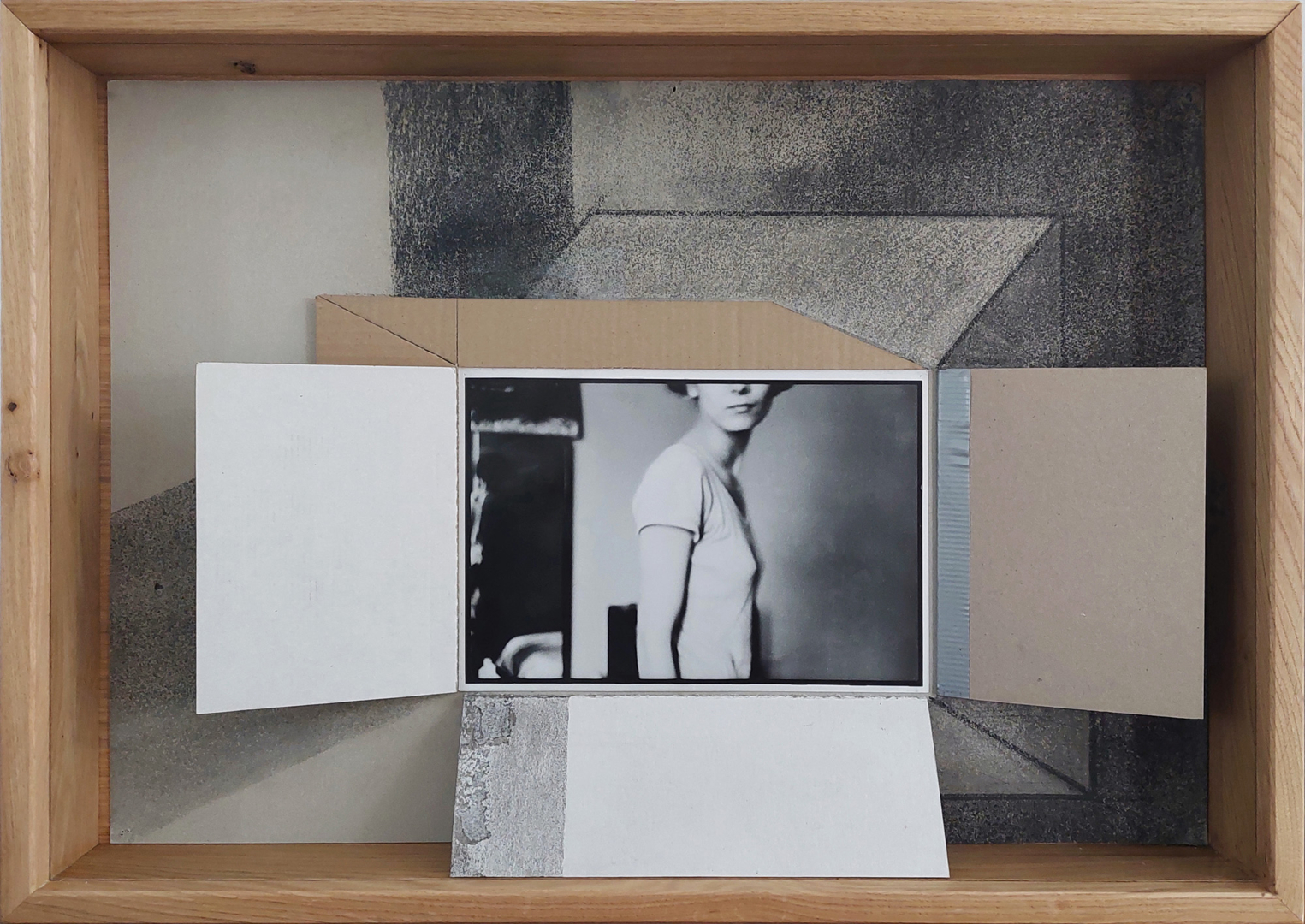
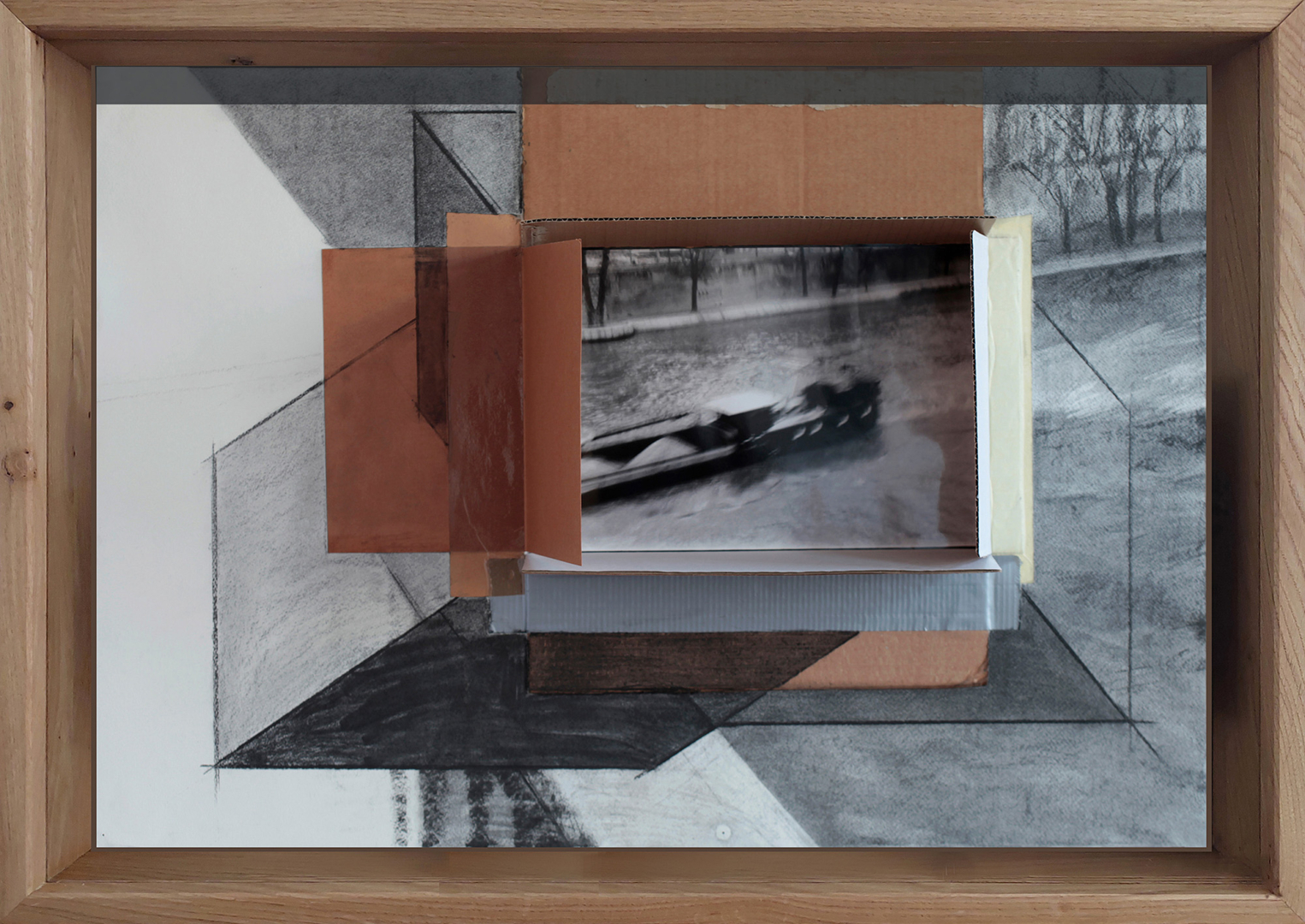
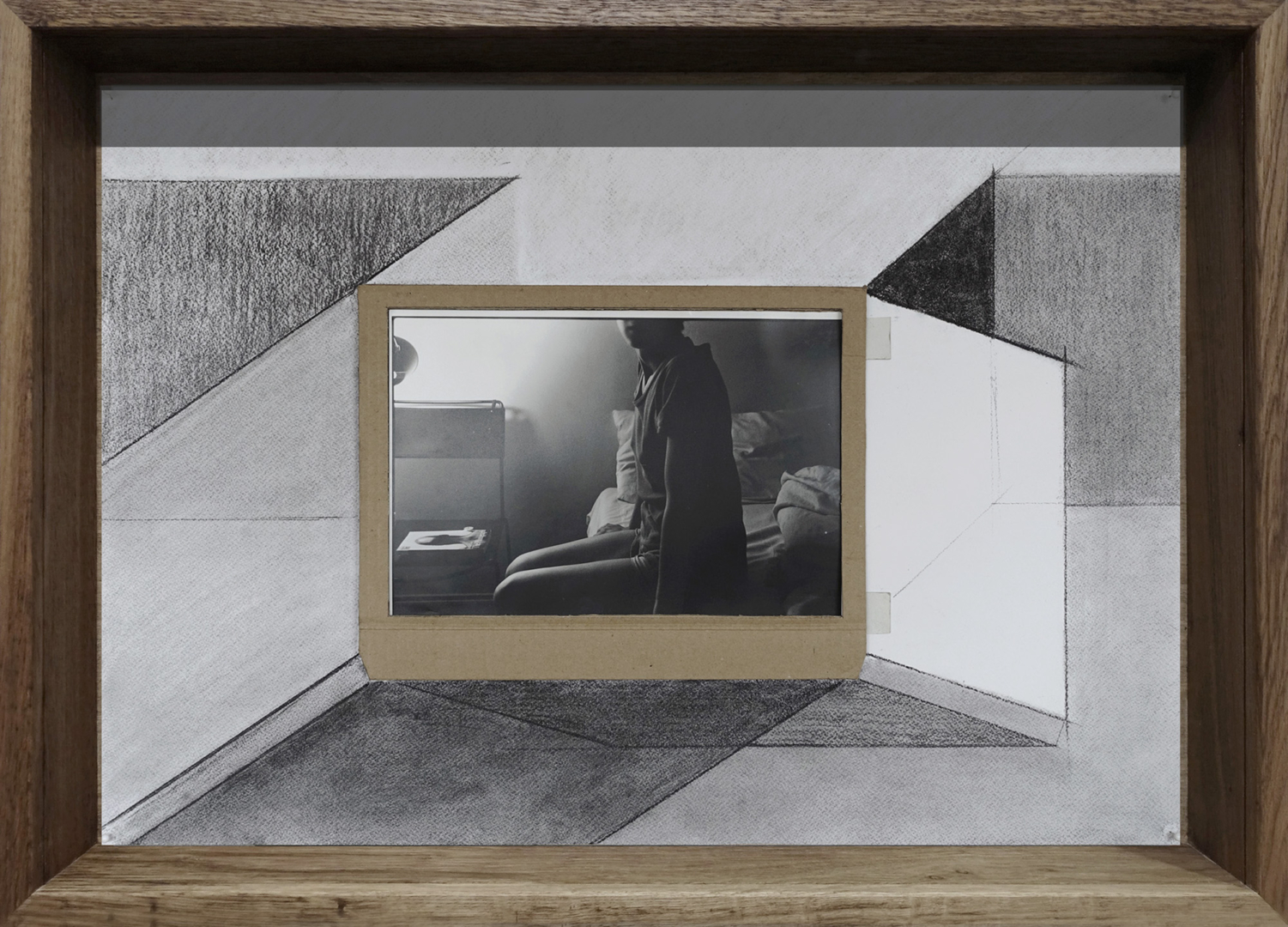
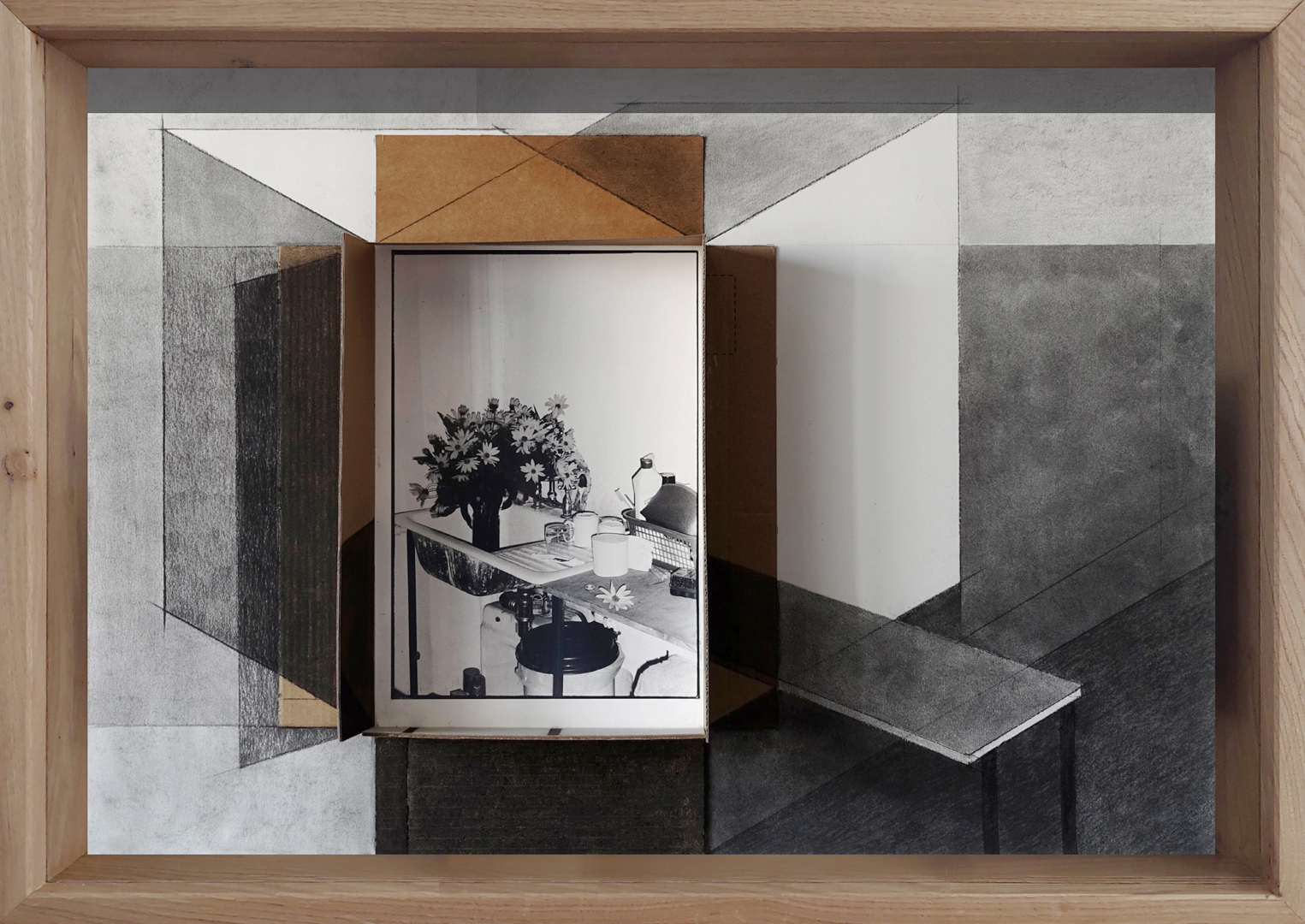
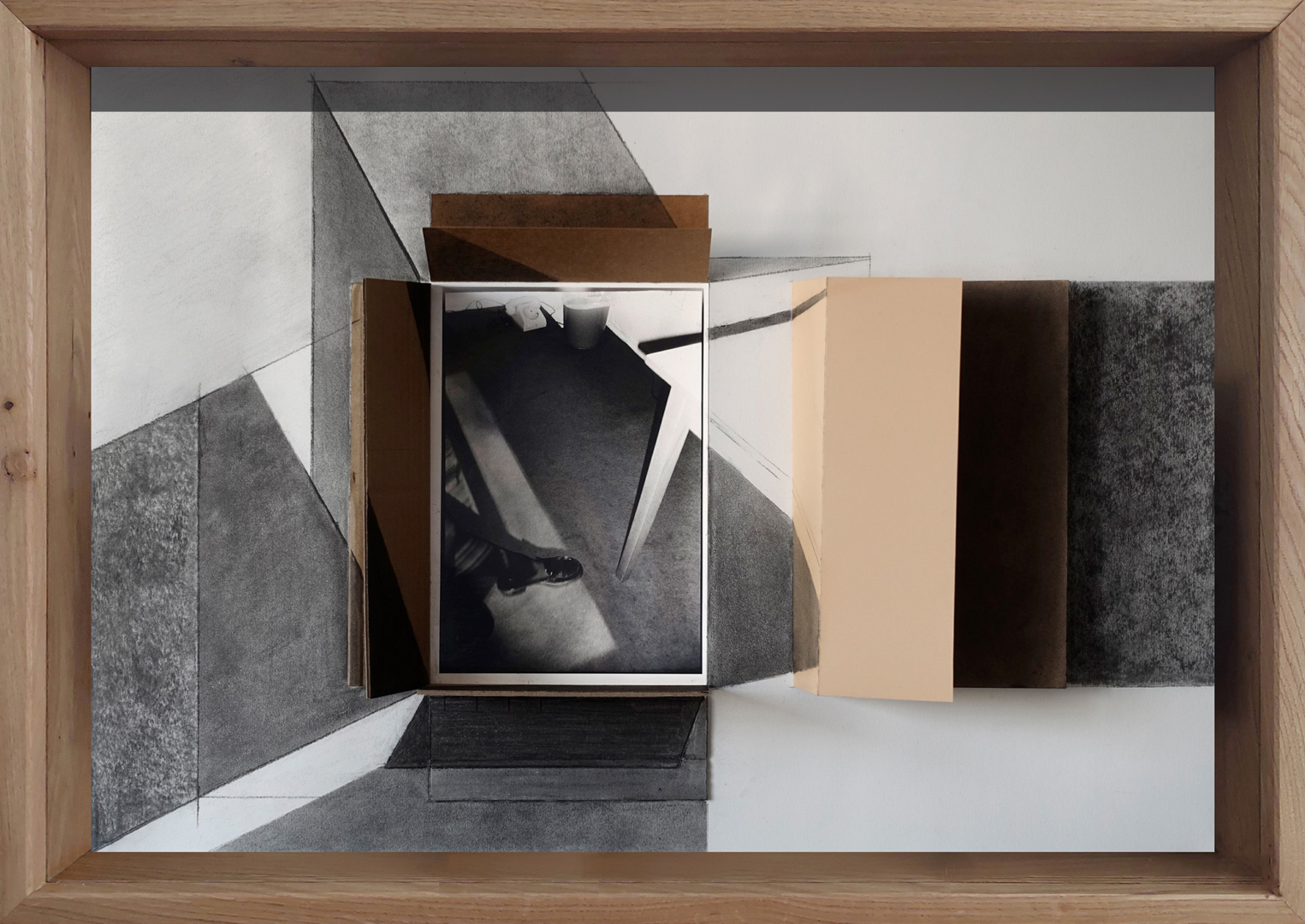
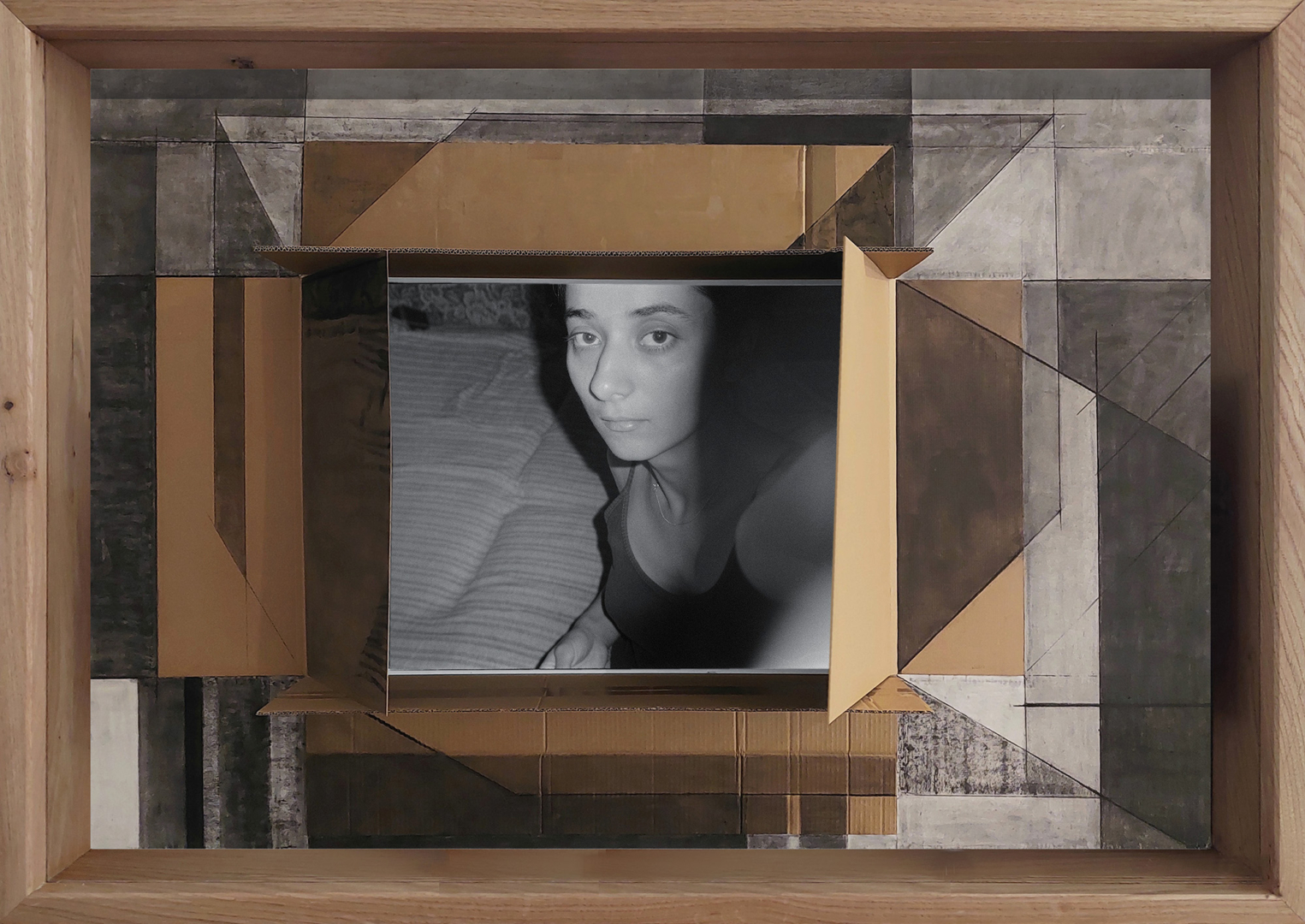
The Viewfinder series examines the photographic process, starting from the photographer’s impulse to operate selections and framing the surrounding reality. The complexity of a situation is distilled and presented through a detail, from a particular vantage point, in a specific light. In my practice, although I make multiple shots and feel with each that I am approaching the image I’m interested in, when it comes time to select for printing, I often stop at the first one – which captures the moment while keeping something of the immediacy that made me press the shutter button.
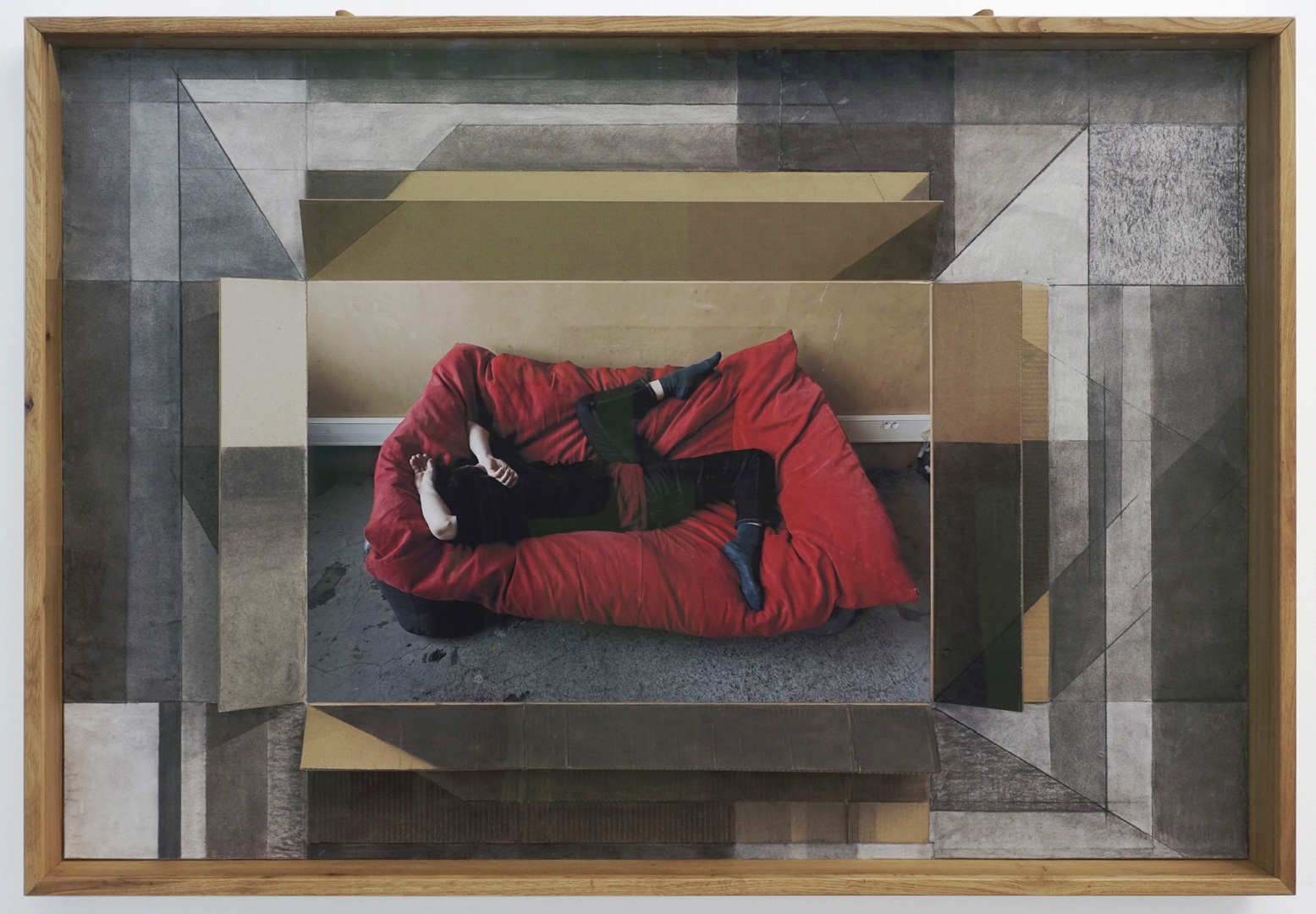
Another element I notice when looking back at the series’ development is its connection to previous projects, some dating back to my student years, when I worked with photography, drawing, and cardboard boxes for objects and installations, some even featuring movable cardboard flaps. In these early works, I find an interest in combining photography with other media or the possibility of reconfiguring a work over time, visual instruments that I further explored in Viewfinder.
read more
The first works in the series took shape in 2014, and since then it has evolved steadily and organically. The transformations the works have undergone are dictated by the working process itself, which provides new ideas and challenges on how to move forward. The starting point has been my personal archive of photographs from the late 1990s, which I revisited after a period of focusing more on managerial projects – Galeria Nouă being the most notable among them. Revisiting this material connected me to strongly self-referential photographs, which, alongside numerous self-portraits, captured specific aspects of both the context of the time and of the analog photographic medium.
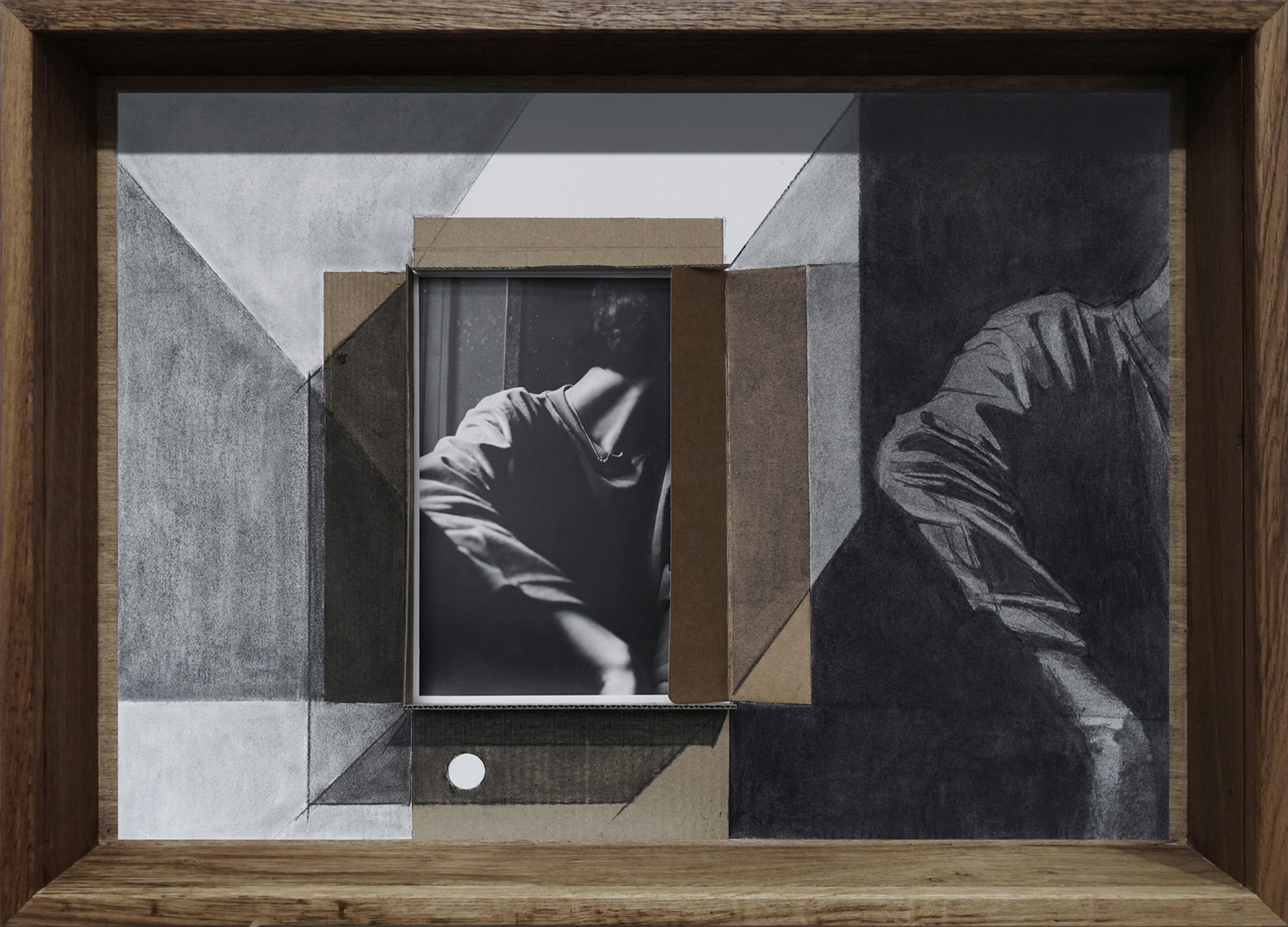
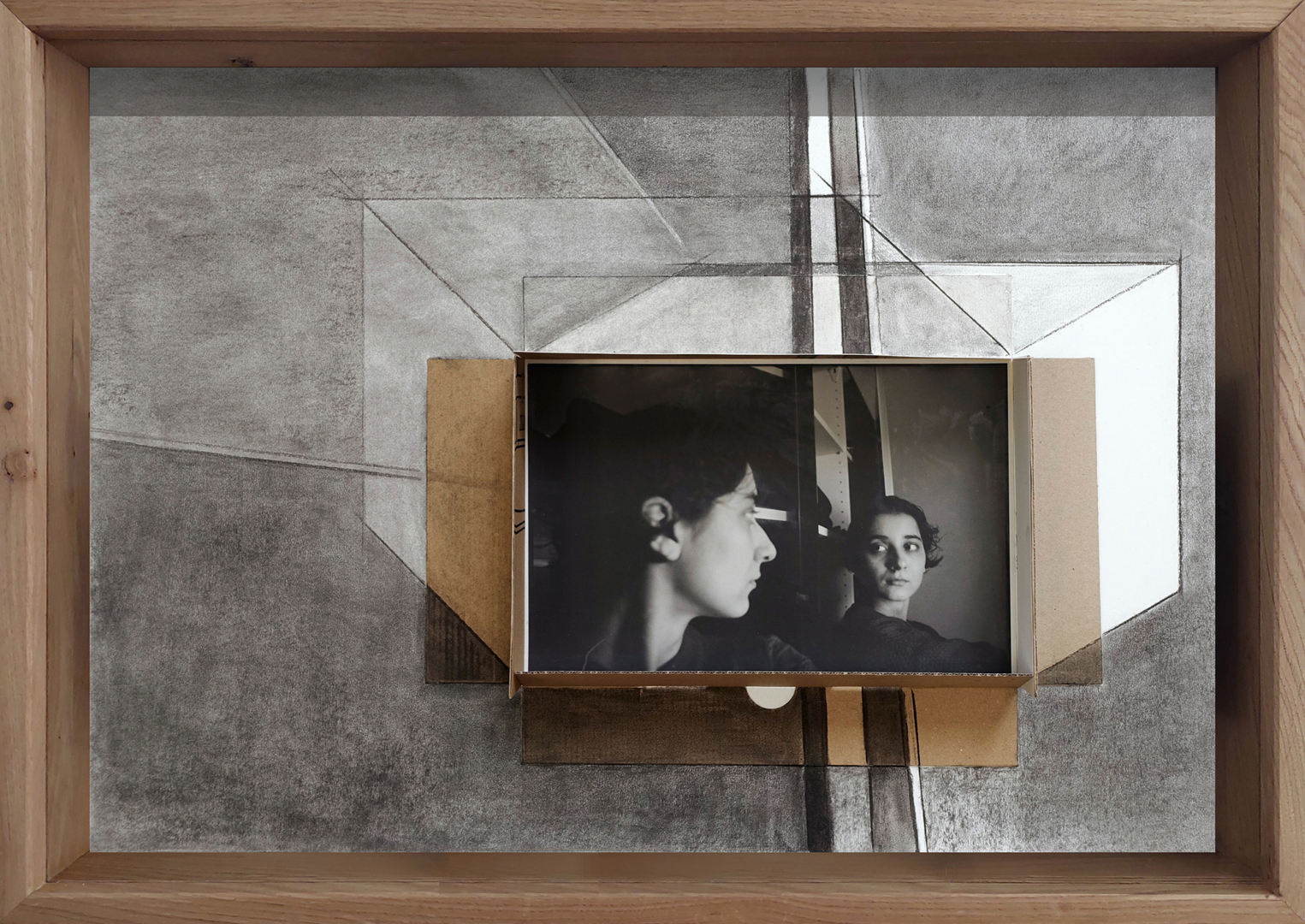
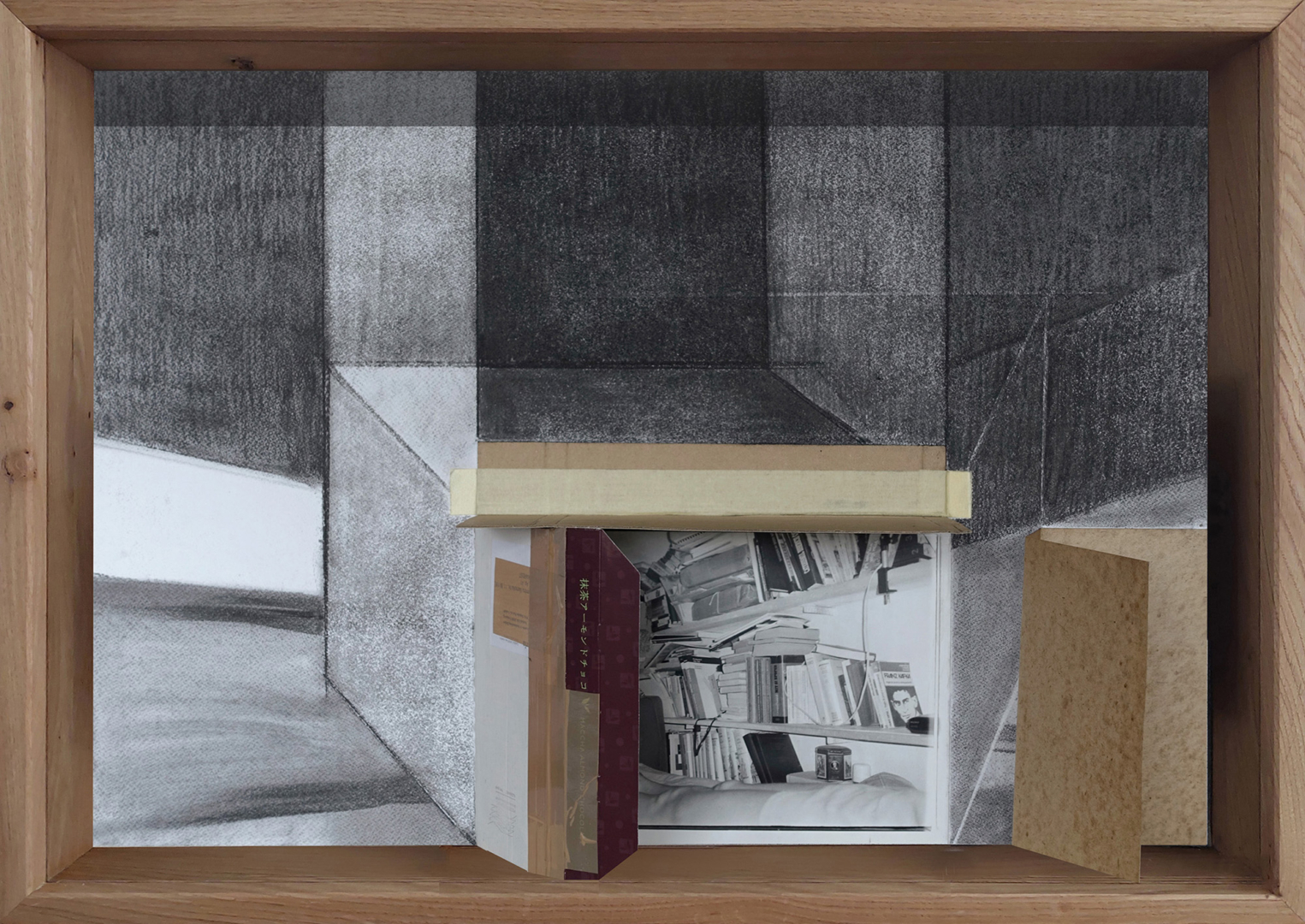
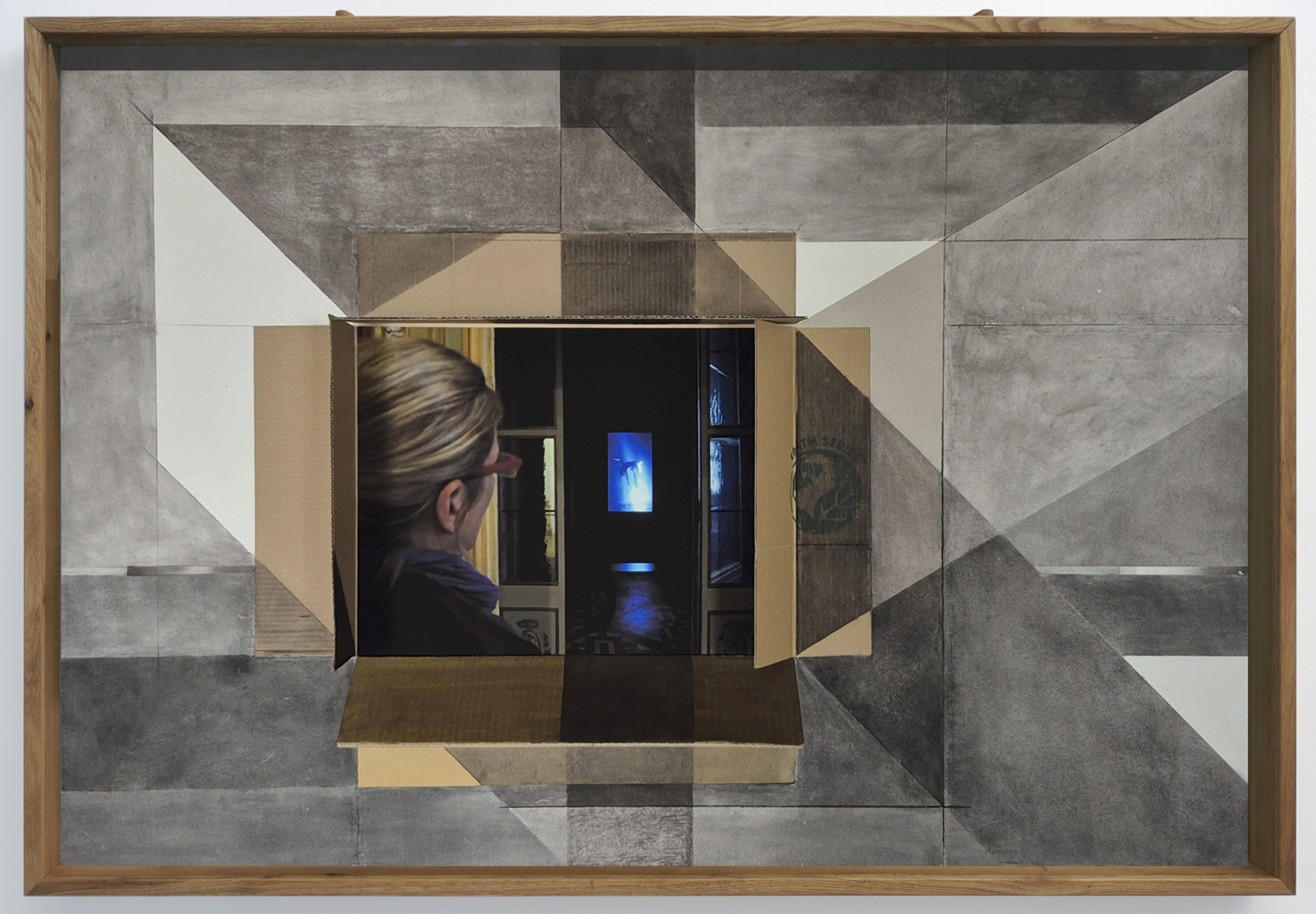
Although in recent years I have begun using color images from a more recent archive for the Viewfinders, the initial works integrated small silver gelatin prints (20 × 30 cm) that had not been previously exhibited. These were placed within a cardboard construction, an assemblage of recycled materials – mostly from boxes in which I stored prints or negatives. Through these assemblages, I recreated the viewfinder folded hood of the camera [1] and embarked on a process of reimagining it not as a technical element but as a conceptual instrument – a means of critically examining the mechanisms by which we select, frame, and confer meaning upon images.
Over the years, Viewfinder has undergone multiple transformations, from paper sheet with foldable flaps to a three-dimensional object, exploring different relationships between these elements and various materialities. I have explored, in turn, the transition between photography and charcoal drawing, the development of three-dimensional structures from cardboard or acrylic sheets, as well as the contrast between negatives on gelatin silver glass plates and contemporary materials.
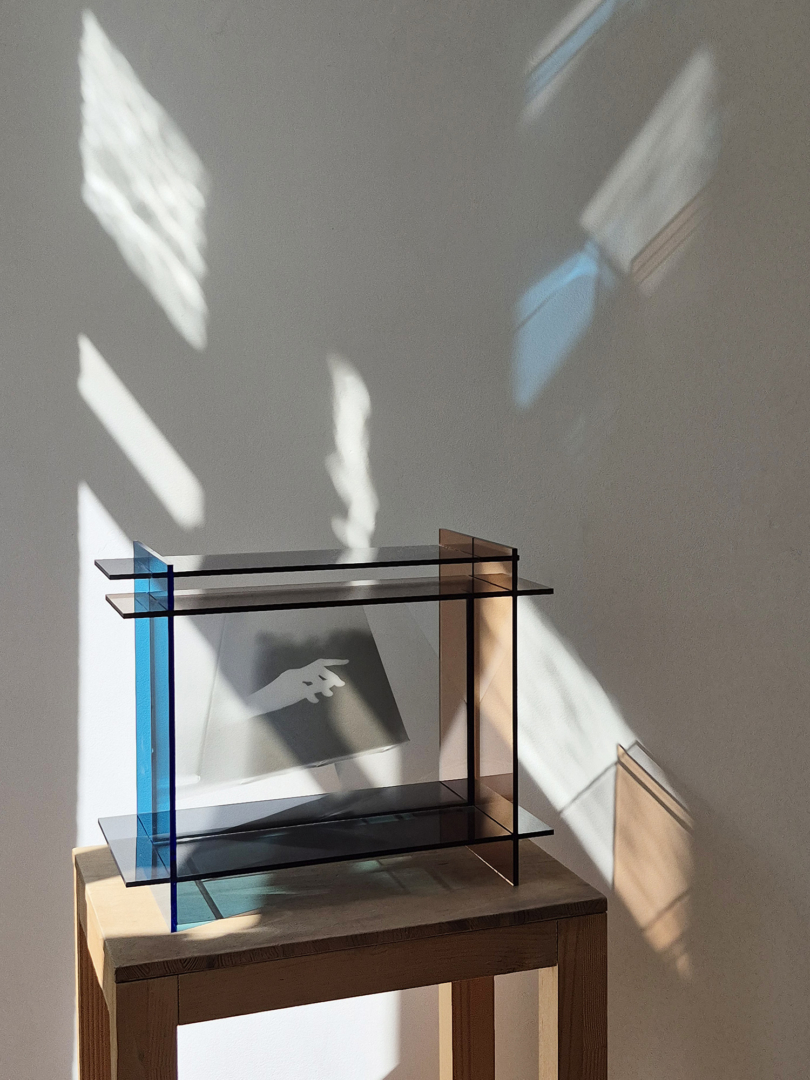
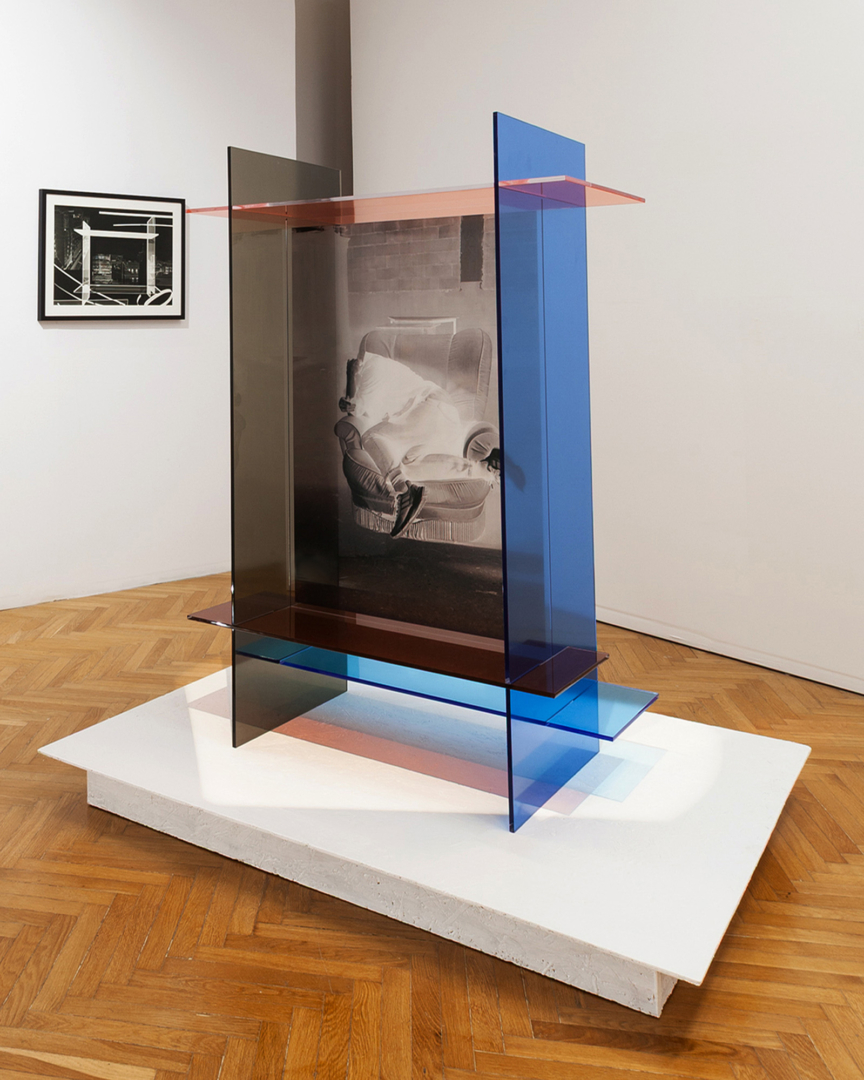
One of the recent works, Viewfinder-Clash (Self-Portrait After a Fall), 2025, is a sculptural piece that transforms the mock-ups from earlier stages into a large, autonomous object. The use of transparent colored acrylic sheets and a photographic negative at the center of this large structure continues the observation of the beginnings of cameras as physical devices, as well as how these mechanisms produced images.
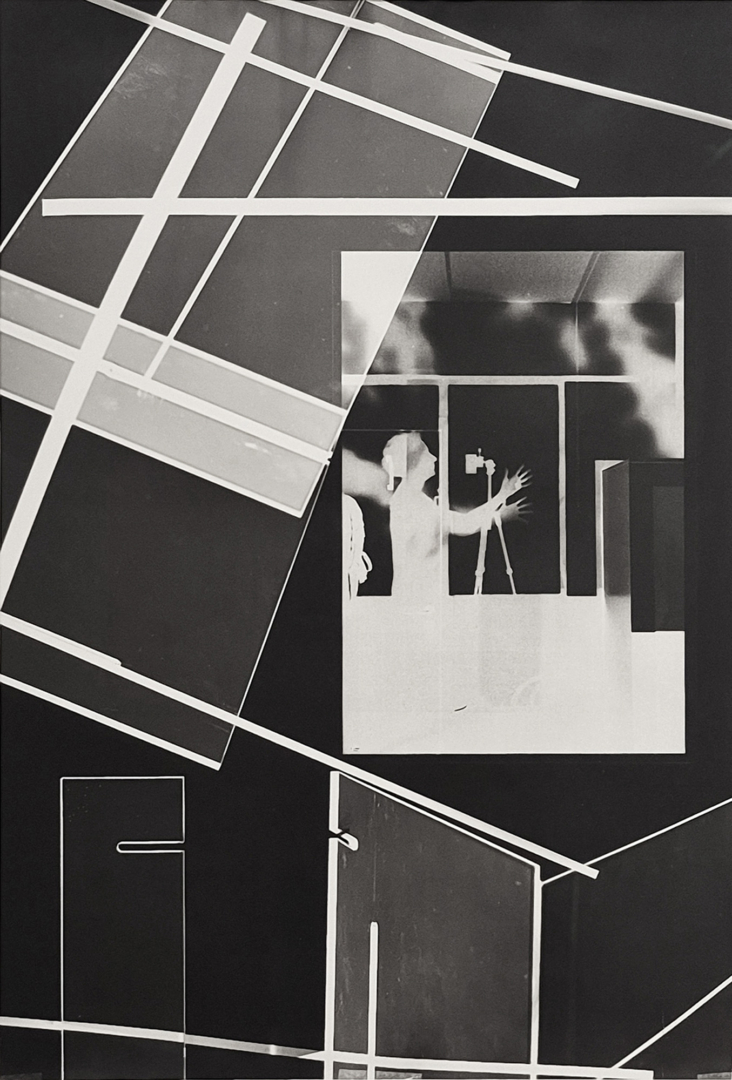
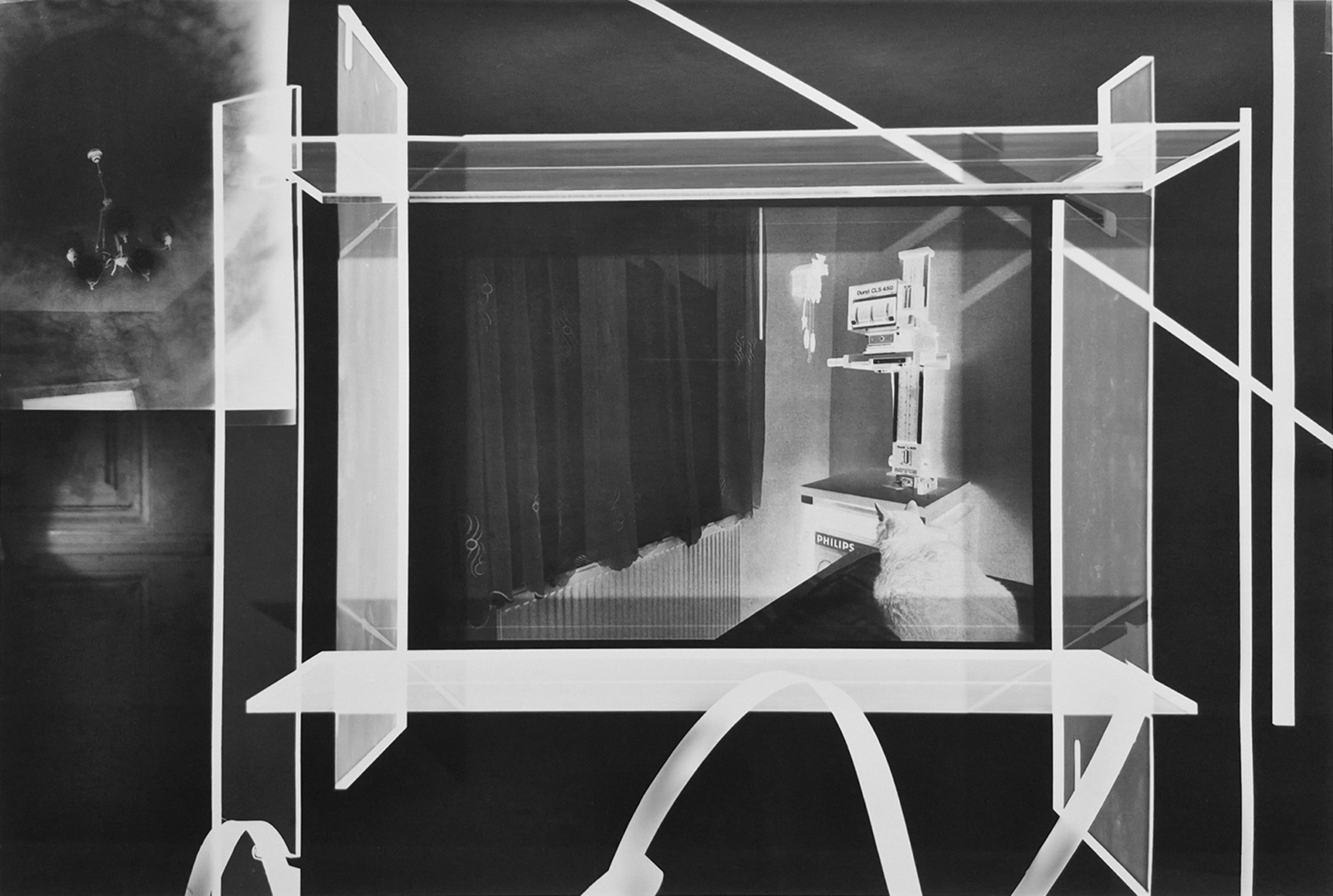
This evolution comes full circle with a return to two-dimensionality through creating photograms [2]. As part of their visual composition, we can discern the rectangular traces of the translucent mock-ups from the previous series, projected onto the photosensitive paper.
The past year has pushed me to move beyond focusing on this single element – the camera viewfinder. I realized it was only a first stopping point and the research continues with the conceptual and formal study of other components of the camera, as part of a broader project of deconstructing the entire photographic apparatus. The aperture, shutter, lenses, film, or sensor offer equally rich possibilities for reflecting on the medium, which I have begun to analyze and develop. Accelerated technological transformations (photo-video devices, image processing software, printing possibilities) make this analysis even more complex, allowing me to follow both this evolution and the interpretation possibilities it offers from the perspective of contemporary art.
———————-
[1] Generally used in large and medium-format equipment.
[2] A photographic image created without a camera, obtained by placing objects directly onto photosensitive paper or film and exposing them to light.