
Christin Müller and Florian Ebner Interview
On the With/Against the Flow. Contemporary Photographic Interventions series of exhibitions


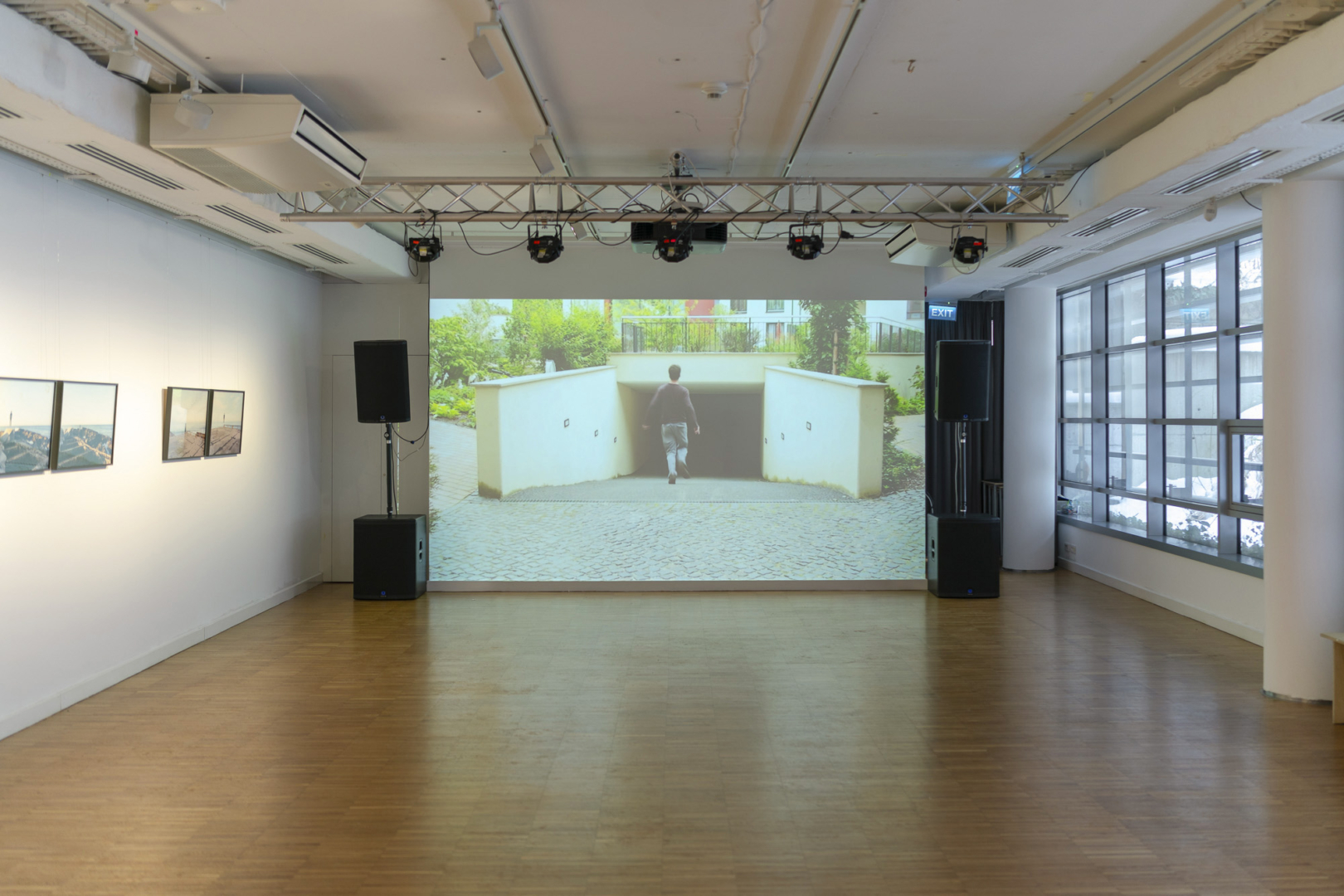


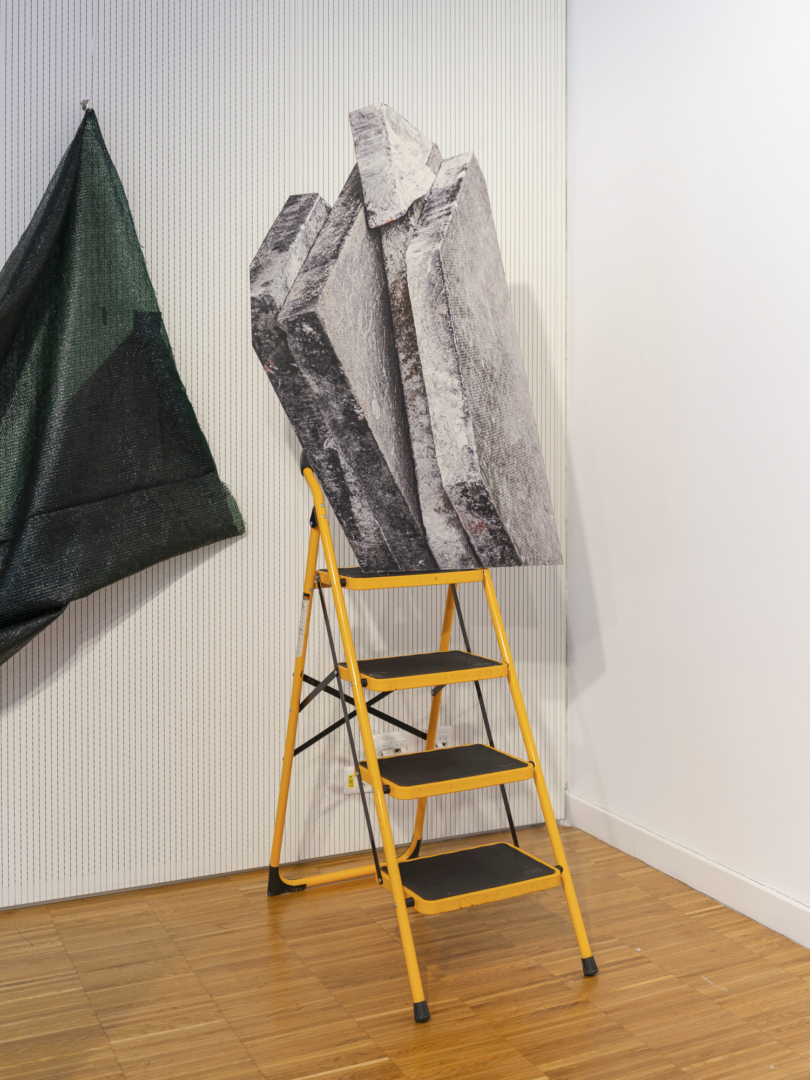
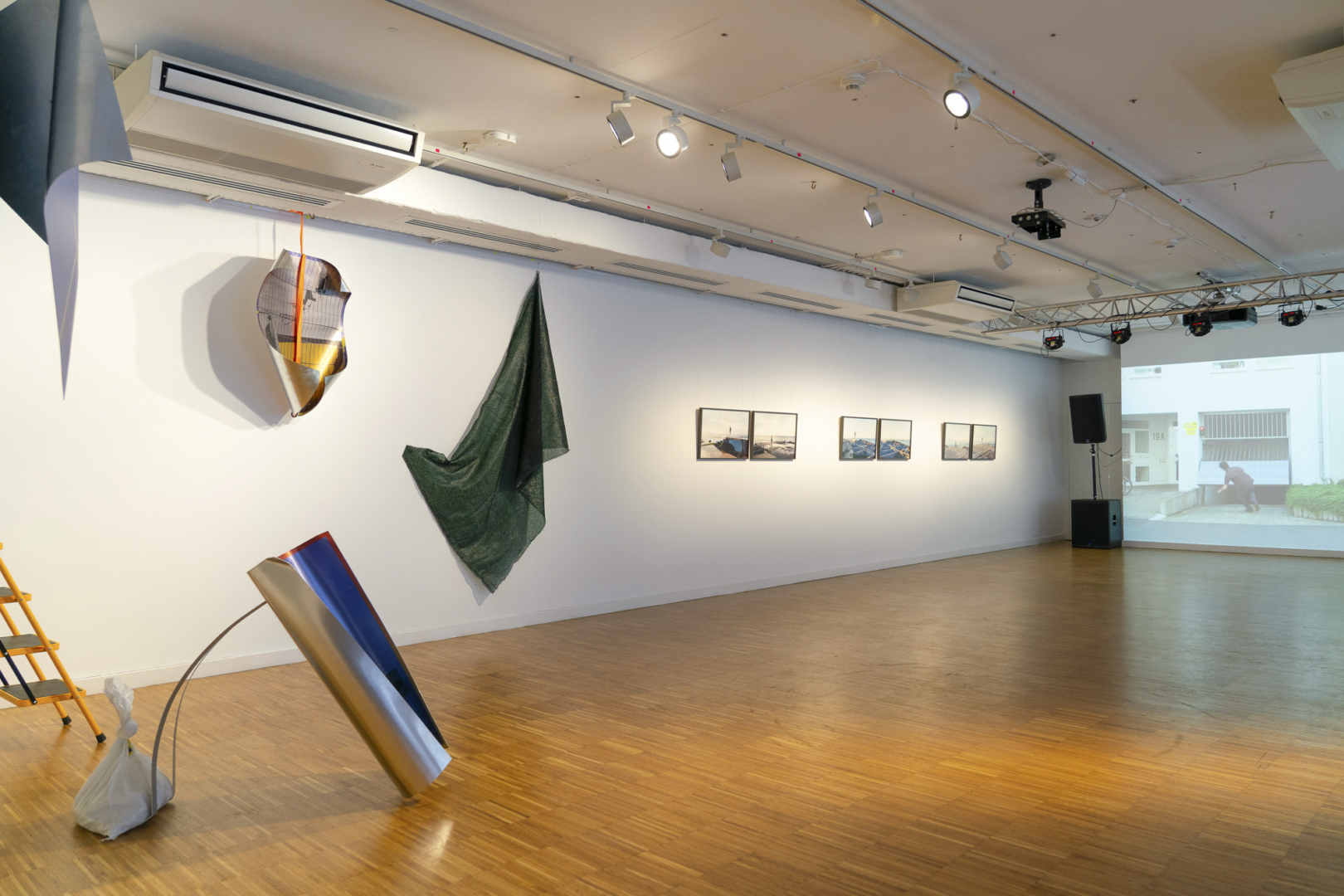


On the occasion of exhibition With/Against the Flow. Contemporary Photographic Interventions, hosted by 2/3 Galeria and the Goethe-Institut in 2025, we spoke with its curators – Christin Müller and Florian Ebner. The two specialists in contemporary photography brought together works by artists who explore photographic interventions in urban space, combining traditional and innovative techniques. In the interview, they spoke to us about the exhibition’s concept, the dialogue between featured works, and the ways in which photography continues to evolve in the digital age.
What was the main inspiration in organizing this exhibition, and how did you select the artists included in it?
Florian Ebner: I believe that, in many places, German photography (or photography from Germany) is still associated with the idea of great seriousness and rigor, with a distant aesthetic, as practiced by the Düsseldorf School in the 1980s. However, things are no longer like that. The five featured artists — Viktoria Binschtok and Michael Schäfer, Sebastian Stumpf and Taiyo Onorato & Nico Krebs — approach their work with a subversive sense of humor. Perhaps this is the only appropriate attitude today. What likewise connects them is a certain “contemporaneity,” but without affirmatively following artistic trends or fashions. Instead, they take a step to the side or contradict the flow of images — alongside and against it, as the title suggests. Very importantly, they intervene in reality, whether it means the reality generated by media images and those circulating online, or the physical reality of our cities… to intervene, not to withdraw — that is the motto, even more so today than ten years ago, when we first conceived the series.
How did you collaborate with each artist to ensure thematic coherence and exhibition relevance?
Christin Müller: Our idea for the With/Against the Flow exhibition series was to pair two artists who share a certain subject and way of working with photography. For the first exhibition, featuring Viktoria Binschtok and Michael Schäfer, the common element was their critical interest in media images and their method of appropriating visuals that circulate in mass media and digital space. This exhibition will be on view at Art Safari (March 7 – July 27, 2025).
For the second exhibition, presented at 2/3 Galeria and the Goethe-Institut (February 20 – March 23, 2025), we selected Sebastian Stumpf and Taiyo Onorato & Nico Krebs, two artists who explore urban spaces and our relationship with them through artistic and performative interventions. With this direction in mind, we worked closely with artists to identify the series of works that best align with these ideas.

Contemporary photographic art is perpetually changing. How do you see the evolution of photography in this context, and how is it reflected in the works featured in the exhibition?
Florian Ebner: Photography made by artists 25 years ago was still shaped by the idea of a “documentary style” (Walker Evans), often through strictly serial views of reality, typological models — especially in German photography — where the focus was on recording, not altering reality. Although, even then, working with media images wasn’t new and had been practiced at least since the 1970s starting with the Picture Generation… the way Viktoria Binschtok and Michael Schäfer appropriate these images today is completely different. Their methods have a hybrid character, combining documentary and fictional elements.
In 2012, photographer Wolfgang Tillmans spoke about “impure and contaminated” images, about “image layering” — aspects defining his own work. These are perhaps the terms that best describe how we work today, moving away from pure documentation and pure fiction toward more complex narrative methods of engaging with reality. When we were working on building these artist pairings for the exhibition, we couldn’t have imagined the significance that AI-generated images would take on just a few years later.
The exhibition brings together works by five contemporary artists. What connections do you see between these works, how do they complement each other within the exhibition?
Christin Müller: When we conceived the exhibition with Sebastian Stumpf and Taiyo Onorato & Nico Krebs, we decided together with ifa (Institut für Auslandsbeziehungen – the German Institute for Foreign Cultural Relations), the initiator of the entire project, that the works of German artists should enter into dialogue with artists from the partner countries. Since the exhibition travels around the world (before arriving in Romania, it was presented in three cities in China), the guest artists change with each new edition.
With the support of the Goethe-Institut, we collaborate with local curators who propose artists interested in expanded photography and urban space. In this context, Romanian artist Mihai Șovăială photographed modernist buildings in Bucharest and printed his images on polystyrene; in another work, he collected fragments of insulation materials and presented them as ready-made sculptures. This approach resonates interestingly, at 2/3 Galeria, with the artistic interventions of Taiyo Onorato & Nico Krebs, through which they highlight unused urban spaces and question the myth of the city of Berlin.
At the Goethe-Institut, we paired Sebastian Stumpf’s works — in which the artist performs for the camera, challenging the pre-established urban order — with Vladimir Florentin’s sculptural photographic objects depicting fragments of construction sites. The Romanian artist’s sculptures have a subversive potential comparable to Sebastian Stumpf’s performative gestures, creating a strong dialogue between their works.
What message or main themes do you wish to convey to the public through this exhibition, in the context of contemporary photography?
Florian Ebner: Contemporary photography is a vast field, also including many decorative works, but we are more interested in those approaches taking a critical stance toward the “here and now” of our times. I believe the four artistic directions presented in this exhibition offer a form of playful resistance and nonconformity—traits also defining the avant-gardes of the 20th century.
In the works of Binschtok and Schäfer, what becomes truly interesting is what gets “lost in translation” when they analyze images circulating online and in mass media… It’s precisely these interstices that become relevant as they question the political rhetoric of power’s “mise-en-scène” or the logic of modern algorithms. This is likewise a form of deconstructing the mechanisms of social governance.
Equally fascinating is the reclaiming of urban space in the works of Sebastian Stumpf and the duo Onorato & Krebs. There is already so much photography and video material documenting cities, but what sets their work apart is the subversive and playful spirit that recalls the Situationists of the 1970s. They don’t just represent the city—they actually perform it.

How would you describe the interaction between the works shown at 2/3 Galeria and those at the Goethe-Institut? Is there continuity between them, or do they create interesting contrasts?
Christin Müller: What connects all four artistic directions is the creative play with urban structures and the photographic medium. At 2/3 Galeria, the focus is more on reflecting upon urban materiality, while the works exhibited at the Goethe-Institut emphasize the performative potential of photography—both during the process of capturing the image and in the way the works are presented.
How do traditional and innovative techniques merge in the works of artists like Nico Krebs and Taiyo Onorato?
Florian Ebner: That’s a very good question. In their works about Berlin, the two artists combine the old artistic tradition of trompe-l’œil with the black-and-white iconography of Berlin as an eternal construction site—a city full of voids and vacant lots. There is an ironic and playful need to “complete” these sites, contributing to the building and extension of the artworks.
In the early 2000s, the two artists developed their own method, which blends the grand American documentary tradition with staging and constructive intervention—something unimaginable 40 years ago. They created two extensive works—The Great Unreal, about the U.S., and Continental Drift, about the Caucasus states—two road movies in which the direct experience of place is constantly overlaid with the mental images we project onto these regions. The work about Berlin, presented here, also plays with this idea of reality as a complex, layered construction.

How do you imagine contemporary photography will evolve in the near future, and what trends should we pay attention to?
Christin Müller: I assume that both analog and digital techniques will continue to shape artistic work produced through photography and, hopefully, not just their use but also a critical approach to the production of AI-generated images will become a subject of artistic inquiry.
Florian Ebner: I hope we won’t give in too easily to the playful temptation of image-generating software offered by AI giants, but that we’ll also take a step aside to question the economic and media-driven workings of these techniques—analyzing this apparatus critically in the spirit of Vilém Flusser. In a way, we continue to play with and against the flow…
Christin Müller: In a world where so much information is created and distributed in the digital space, artists working with photography-based images can offer an alternative perspective to news imagery and social media content, inviting us to gather at exhibitions to discuss what is really happening in the world.
– by Andra Mihai
– translation Andrei Mateescu
Text courtesy of theinstitute.ro, where it originally appeared, here.

